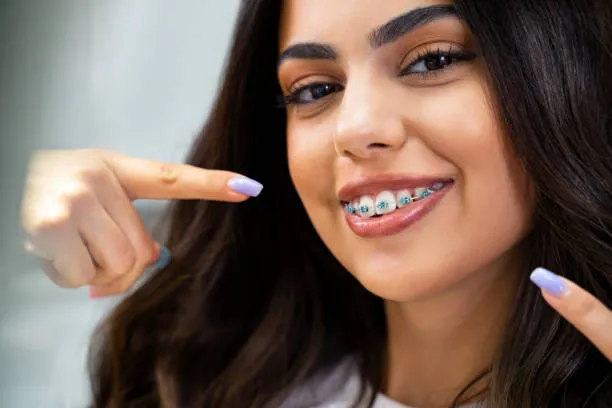
Ceramic braces are tooth-colored orthodontic brackets that straighten teeth while blending naturally with your child's smile. These fully customized brackets are made from polycrystalline alumina, a safe, durable material approved for dental use. They work just like traditional metal braces but stay far less noticeable on the teeth. For kids and tweens who feel self-conscious about wearing braces, ceramic options offer effective correction without the obvious metal look that older generations remember.
The brackets attach to teeth just like metal braces do. The key difference? They match the natural shade of tooth enamel beautifully. When paired with clear or tooth-colored archwires, ceramic braces become nearly invisible from a conversational distance. Your child can smile in photos, at school, and during activities without feeling like their braces define their appearance. That kind of confidence matters during the tween and teen years more than most parents realize.
Ceramic braces straighten teeth by bonding tooth-colored brackets to each tooth, then connecting them with an archwire that applies steady, gentle pressure. Over time, that pressure guides teeth into proper alignment. Small ligatures hold the wire in place while your orthodontist makes regular adjustments.
Each bracket bonds to the tooth surface using dental adhesive, and an archwire threads through every fully customized bracket. Small elastic ligatures, often clear or white to keep the discreet look, hold the wire securely. Every 4-8 weeks, your child visits the orthodontist for adjustments where the wire gets tightened or replaced to continue tooth movement.
The timeline varies based on your child's specific orthodontic needs. Some cases wrap up in under two years, while others take closer to three years for complex bite corrections.
Kids care about how they look. That's not vanity, it's developmentally normal. Ceramic braces respect this reality while still delivering strong orthodontic outcomes for ceramic braces for kids in Leland, NC and the surrounding area.
Nearly invisible brackets blend with tooth color, making them photo-friendly for school pictures, sports photos, and family events. They're less noticeable during conversations and presentations, and many kids find them smoother against lips and cheeks. On the clinical side, ceramic braces correct the same complex issues that metal braces address, the ceramic materials resist staining with proper care, and kids tend to follow through on care instructions because they feel less self-conscious. Polycrystalline alumina has been used in orthodontics for decades and carries FDA clearance for dental applications, giving parents real peace of mind about safety.
When children feel good about how their braces look, they're more likely to follow care instructions. They'll brush properly, avoid problem foods, and show up for all their adjustment consultations. That cooperation often leads to better smile transformation outcomes and sometimes shorter treatment times. The orthodontic team at Cape Fear Orthodontics has observed that kids who feel confident during treatment tend to stick with better oral hygiene habits throughout the process. It's a small change in how they feel that pays off in how their teeth end up.
Picking the right orthodontic solutions for your child comes down to a few practical things: their age, what they do after school, and what their teeth actually need. Here's how the main options compare:
| Feature | Ceramic Braces | Metal Braces | Clear Aligners |
|---|---|---|---|
| Visibility | Nearly invisible | Highly visible | Virtually invisible |
| Durability | Strong with proper care | Most durable option | N/A (removable) |
| Cost | Higher than metal | Most affordable | Varies by case |
| Best Age | Tweens and teens (12+) | Any age | Self-disciplined teens |
| Compliance Needed | Moderate | Moderate | High (must wear 22 hrs/day) |
| Sports-Friendly | Pair with a custom mouthguard for protection | Very durable with mouthguard | Remove for contact sports |
Tweens and teens who want effective treatment without obvious metal brackets. Great for kids who'll take care of their braces but might struggle with removable aligners.
Younger children, active athletes in contact sports, or families prioritizing durability and affordability.
Highly responsible teens with mild to moderate alignment issues who can commit to wearing aligners 22 hours daily.
Your orthodontist can recommend the best fit after evaluating your child's teeth, bite, and lifestyle factors.
The cost of ceramic braces for kids depends on four main factors: treatment complexity, treatment duration, materials used, and geographic location. The right starting point is a clear estimate from your orthodontist. Picture two siblings: one needs minor spacing closed up in just over a year, the other needs a full bite correction that takes closer to two and a half years. Even with the same brackets, their final costs will look quite different.
Treatment complexity drives most of the difference. Simple spacing issues cost less than severe crowding or bite problems requiring longer orthodontic solutions. The longer your child wears braces, the more adjustment consultations are needed, which affects total cost. Then there's the material itself: ceramic brackets cost more to manufacture than metal brackets, so they typically run higher than a comparable metal case. Geography also factors in, since orthodontic fees vary by region and practice. Families looking at ceramic braces for kids in Leland, NC tend to find the local market consistent with surrounding areas.
Most dental insurance plans with orthodontic benefits cover a portion of ceramic braces, just as they would metal braces. The coverage amount typically applies to the total cost regardless of bracket type.
A free consultation provides the most accurate cost estimate for your child's specific case.
Not every child is an ideal match for ceramic braces. Here's what tends to make a strong candidate, and a few things that might point you toward another option.
Ceramic braces work best once all permanent teeth have erupted, typically around age 12 or older. Younger children still losing baby teeth usually do better with metal braces or early intervention care. If your child expresses worry about looking different or feeling embarrassed by braces, ceramic brackets can ease those concerns while still providing effective correction. Plenty of families considering ceramic braces for kids in Leland, NC choose ceramic specifically for this reason, especially when school photos or yearbook season is on the horizon.
Diligent brushing and flossing matter too. Kids who already keep up with good dental care habits adapt well, while those who struggle with brushing may need extra support, or might do better with metal braces that show staining less obviously. Lifestyle plays a part as well. Ceramic brackets hold up well day to day, but for contact sports like football, hockey, or wrestling, metal braces tend to be the more rugged pick. A custom mouthguard makes ceramic braces workable for most athletes, though, so don't count them out just because your kid loves the field.
Ceramic braces treat the same conditions as metal braces, including crowding, spacing, overbites, underbites, and crossbites. Your orthodontist evaluates your child's specific issues to confirm ceramic braces can deliver the needed smile transformation.
The orthodontic team at Cape Fear Orthodontics, including Dr. G, a diplomat of the American Board of Orthodontics, evaluates each patient individually to determine which approach will work best for their smile and their life.
Yes. Ceramic braces use FDA-approved materials that have been used safely in orthodontics for decades. The polycrystalline alumina in ceramic brackets is biocompatible and poses no health risks. These braces undergo the same rigorous testing as all orthodontic appliances.
The ceramic brackets themselves resist staining quite well. However, the clear elastic ligatures that hold the wire in place can pick up color from foods like curry, tomato sauce, coffee, and berries. These ligatures get replaced at each adjustment, so any discoloration is temporary. Avoiding staining foods and drinks, especially right after getting new ligatures, helps keep the clean look.
Ceramic braces typically take 18 to 30 months for kids, similar to metal braces. The exact timeline depends on your child's specific orthodontic needs. Simple spacing corrections finish faster, while complex bite issues require more time. Your orthodontist provides a personalized estimate during the free consultation.
No. Both types cause similar levels of mild tenderness. Your child may feel pressure for a few days after getting braces and after each adjustment, which is completely normal and actually means the braces are doing their job moving teeth into better positions. Over-the-counter relief and soft foods help during adjustment periods.
Absolutely. Your child can participate in sports while wearing ceramic braces. A properly fitted mouthguard protects both the braces and your child's mouth during activities. For high-contact sports like football or hockey, talk through options with your orthodontist. Some families choose metal braces for athletes who face frequent impacts.
Good oral hygiene keeps ceramic braces looking great and prevents cavities. Have your child brush after every meal using a soft-bristle toothbrush. Flossing daily with a floss threader or orthodontic flosser removes food particles between teeth and around fully customized brackets. Limiting sugary drinks and staining foods also helps maintain both oral health and bracket appearance. The team at Cape Fear Orthodontics, led by Dr. G, a diplomat of the American Board of Orthodontics, can walk families through specific cleaning tools that work best with ceramic braces.
Curious whether ceramic braces are a fit for your child? A free consultation with the team at Cape Fear Orthodontics is the clearest way to review your child's teeth, bite, and lifestyle, then map out a custom plan for personalized and top-quality treatments.
Experience the Transformative Difference with Cape Fear Orthodontics
Transform your smile at Cape Fear Orthodontics. Contact us today for personalized care and expert guidance.
Plan your visit today! Check out Cape Fear Orthodontics' office hours below