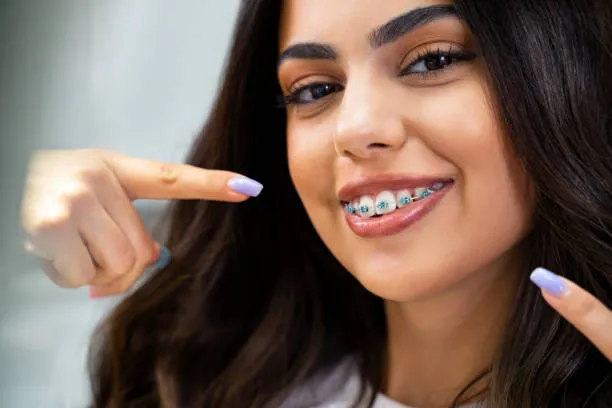
You've thought about straightening your teeth for years. Maybe decades. Every time you picture yourself with a mouth full of metal, you put it off for another year. You're not alone. Plenty of adults skip orthodontic care entirely because they can't imagine showing up to client meetings, dinner dates, or family photos with traditional braces. Let's be honest, nobody hits 35 dreaming of looking like a middle schooler again.
Here's the good news: ceramic braces give you the results you want without the look you're trying to avoid. They work just as well as metal braces but blend naturally with your smile. Below, we'll cover how ceramic braces work, what they cost, and how to know if they're right for you, so you can decide with the full picture in front of you.
If the patient is a teen rather than an adult, see ceramic braces for teens in Leland, NC
Ceramic braces are tooth-colored orthodontic brackets that straighten teeth like metal braces but blend with natural enamel. They bond to the front of your teeth and connect through an archwire that applies steady pressure to shift teeth into proper alignment. The difference from metal is purely cosmetic: ceramic disappears into your smile, making the appliance far less noticeable during daily life.
The ceramic material itself comes in two main types: polycrystalline and monocrystalline. Polycrystalline brackets have a slightly frosted, opaque appearance. Monocrystalline brackets are more translucent and tend to blend even better with lighter tooth shades. Your orthodontist will help you choose the option that matches your teeth most closely.
Functionally, ceramic braces work the same way as their metal counterparts. Each tooth gets its own fully customized bracket sized and positioned for that specific tooth. An archwire links the brackets together, and the system applies steady pressure to guide your teeth into proper alignment over time.
Many orthodontists pair ceramic brackets with tooth-colored or frosted wires for added discretion. You might also hear ceramic braces called "clear braces" or "aesthetic braces." Different names, same concept: effective orthodontic care that doesn't announce itself every time you open your mouth. Traditional metal options are available if you're weighing the differences.
Your orthodontist bonds a small ceramic bracket to the front surface of each tooth using a special dental adhesive. Once the brackets are in place, an archwire threads through them, connecting your upper or lower teeth in a continuous loop.
This archwire is where the real work happens. The wire applies gentle, continuous pressure to your teeth, encouraging them to shift gradually into their ideal positions. Your bone tissue responds to this pressure by remodeling around each tooth root, allowing movement without damage.
Every 6-8 weeks, you'll come in for an adjustment. During these visits, the wire may be tightened or replaced with a slightly different shape to keep your progress on track.
Treatment duration varies based on your specific needs. Most adults wear ceramic braces somewhere in the range of 18 to 36 months. Mild crowding might resolve in under two years. More complex bite issues or significant spacing could extend closer to three years.
Depending on your case, your orthodontist may add elastics (small rubber bands) that connect upper and lower brackets. These help correct bite alignment and jaw positioning. They're removable, so you'll take them out for eating and put fresh ones in throughout the day.
Ceramic brackets match your tooth color, so they're far less noticeable than metal. From a few feet away, most people won't realize you're wearing braces at all. That makes a real difference in professional settings, social situations, and everyday confidence around the office or at events.
Yes, ceramic braces handle complex tooth movements that removable aligners often can't. Clear aligners work well for many patients, but they have limits. Severe crowding, significant bite problems, and certain tooth rotations respond better to fixed appliances. Ceramic braces give you that capability without the visual trade-off. Aligners have their place too, but fixed braces still win on precision.
With removable aligners, success depends on wearing them 22 hours a day. That's a lot of discipline. Ceramic braces stay on your teeth around the clock, working whether you remember them or not. You show up for consultations, follow care instructions, and let the appliance do its job.
Metal braces catch light and draw attention in photos. Ceramic brackets don't create that same contrast. Wedding photos, LinkedIn headshots, vacation selfies: you can smile freely without your braces stealing the spotlight.
Treatment timelines also stay comparable. You might assume that choosing aesthetics means accepting slower results. Not true. Ceramic braces move teeth at essentially the same rate as metal braces. You're not sacrificing time for appearance.
One more thing worth knowing: modern ceramic materials have been engineered specifically to resist staining around the bracket edges. Early ceramic brackets had a reputation for discoloring over time, but the materials used today hold their color far better with proper care, giving you a discreet appearance throughout the full course of orthodontic solutions.
Choosing between the options comes down to your priorities. Here's how the three main choices compare:
| Feature | Metal Braces | Ceramic Braces | Invisalign |
|---|---|---|---|
| Visibility | Most noticeable | Blends with teeth | Nearly invisible |
| Durability | Very durable | Slightly more fragile | N/A (replaced every 1-2 weeks) |
| Removability | Fixed | Fixed | Removable |
| Complex Cases | Excellent | Excellent | Good for mild-moderate |
| Daily Compliance | None required | None required | 22 hours/day wear |
| Bracket Size | Smallest | Slightly larger | No brackets |
| Cost Range | Most affordable | Moderate | Varies widely |
Metal braces remain the most affordable option and handle virtually any orthodontic case. They're also the most visible, which is exactly why many adults look elsewhere.
Ceramic braces cost slightly more due to the specialized materials, but they deliver the same results with far better aesthetics. The brackets are marginally larger than metal ones, though most patients find this unnoticeable after the first few days.
Invisalign offers the most discretion since the aligners are nearly invisible. They require serious commitment to wearing them almost all day, every day. They also work best for mild to moderate cases. Complex bite corrections often need the precision of fixed appliances.
Your orthodontist can evaluate your specific situation and help you weigh these factors. The right choice depends on your lifestyle, your case complexity, and what matters most to you.
Ceramic braces typically cost more than metal but less than premium aligner systems, with most adult cases landing in the mid-range of orthodontic pricing. Several factors influence what you'll pay:
Case complexity plays the biggest role. Straightforward alignment cases cost less than complex bite corrections requiring extended care time. More visits, more adjustments, and more time in braces all push your total investment upward.
Ceramic materials cost more than metal. The brackets themselves are more expensive to manufacture, which means higher fees for the orthodontic solutions. On the price spectrum, ceramic options sit between metal braces and clear aligners.
A few things often work in your favor here:
A free consultation gives you real numbers. Online estimates only go so far. Your orthodontist needs to evaluate your teeth, take digital scans, and create a personalized plan before providing an accurate cost estimate. Most practices offer free consultations for exactly this purpose.
Ceramic braces work well for a wide range of patients, but they're particularly suited to certain situations:
If you work in a client-facing role, appear on camera, or simply prefer to keep your orthodontic care low-key, ceramic braces make sense. They let you straighten your teeth without constantly explaining your braces to everyone you meet.
High school and college students often appreciate having a less noticeable option, especially for school photos, proms, and graduations.
Whether you're dealing with minor crowding or significant bite issues, ceramic braces can handle it. They're not limited to simple cases the way some alternatives are.
If you know yourself well enough to admit that removable aligners might spend too much time sitting on restaurant tables or getting lost in gym bags, fixed braces eliminate that variable entirely. No tray to track. No timer to watch. The appliance simply works.
Ceramic brackets require careful cleaning to prevent staining around the edges. If you're willing to brush after meals and follow your orthodontist's care instructions, you'll keep that clean, blended appearance throughout your time in treatment.
Ceramic brackets can fracture under impact more easily than metal. If you play football, hockey, or other contact sports, you'll need a proper mouthguard, or you might consider metal braces for added durability.
The best way to confirm your candidacy is through a free consultation with a qualified orthodontist who can evaluate each patient individually and recommend the most effective approach.
Most adults wear ceramic braces for 18 to 36 months, depending on case complexity. Mild crowding may resolve in under two years, while more involved bite corrections can take closer to three. Your orthodontist will give you a specific timeline after a free consultation and digital scans.
Modern ceramic brackets are designed to resist staining far better than earlier versions. The brackets themselves typically hold their color throughout treatment. The clear elastic ties around each bracket can pick up stains from coffee, red wine, or curry, but those get swapped out at every adjustment, so any discoloration is short-lived.
The pressure required to move teeth is the same regardless of bracket material, so the soreness after adjustments feels similar. Some patients find ceramic brackets slightly bulkier, which may take a few days to get used to. Most discomfort fades within the first week and after each adjustment.
Yes, many adults choose ceramic brackets for their upper teeth (the most visible) and metal for the lower. This combination saves a bit on cost while keeping the visual benefit where it matters most. Your orthodontist can walk you through whether that hybrid approach fits your case.
It depends on your case and your habits. Ceramic braces handle complex tooth movements that aligners can't, and they don't require 22 hours of daily compliance. Invisalign offers more discretion and easier eating. Both produce excellent smile transformation outcomes when matched to the right patient. A qualified orthodontist can help you decide which fits your situation during a free consultation.
Experience the Transformative Difference with Cape Fear Orthodontics
Transform your smile at Cape Fear Orthodontics. Contact us today for personalized care and expert guidance.
Plan your visit today! Check out Cape Fear Orthodontics' office hours below